╳

Home



 2026-10-29

Watch Knowledge Every Enthusiast Should Know: Five Fundamentals That Reveal a True Collector
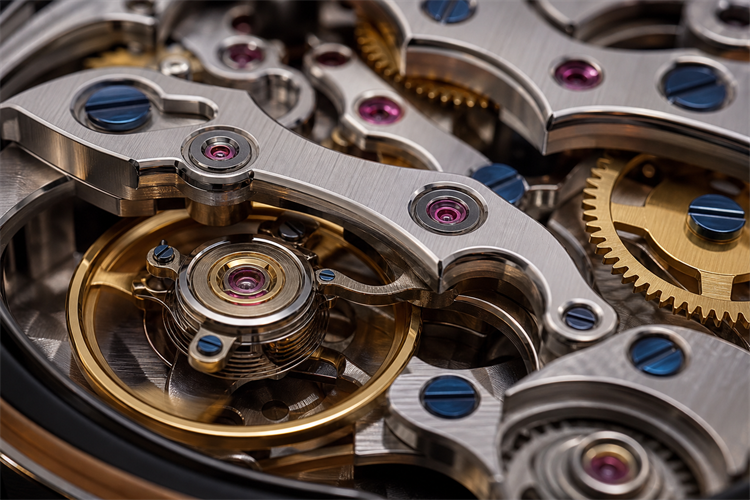
Many people who wear watches understand only the surface: an attractive design and a handful of performance specifications. In truth, the world inside a watch is far deeper and more intricate than what the eye can see.
Know a little more about watches, and you'll always have something worth talking about. Here are five essential pieces of watch knowledge to help you become a seasoned enthusiast.
---
## 01. Why Do Watch Hands Always Turn Clockwise?

The answer goes back to the invention of the sundial.
In ancient times, people relied on the position of the sun to determine the time. The sundial was born of exactly this principle — a timekeeping instrument that read the hour from the position of a shadow cast by sunlight.
Because the sun rises in the east and sets in the west, and because Egypt — where the sundial was invented — lies in the Northern Hemisphere, the shadow on a sundial there moves in a clockwise direction. That is how clockwise rotation became the standard direction for timekeeping instruments.
---
## 02. Why Are Watches Afraid of Magnetic Fields?
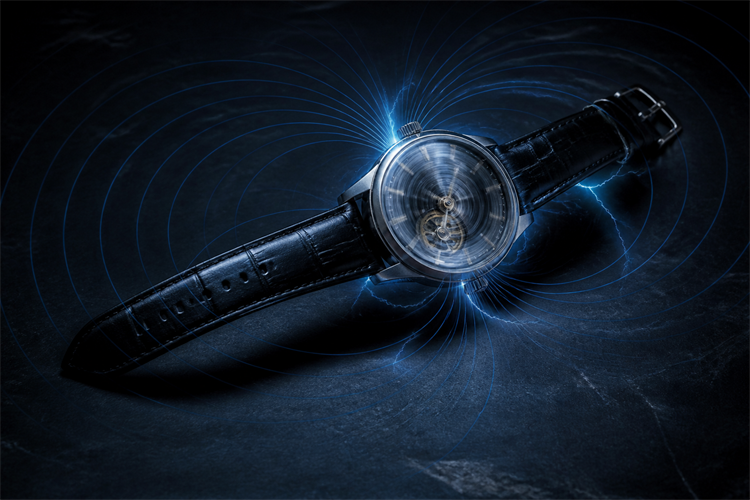
Every watch enthusiast has heard the same warning: keep your watch away from magnetic fields.
In daily life we're constantly reminded that watches should be stored and worn away from strong magnetic objects. From the magnetic clasps on bags and belts to household electronics such as televisions and refrigerators, anything can potentially affect a watch's timekeeping.
The reason is that many components inside a mechanical movement are made of steel, which is readily disturbed by magnetic fields. Parts such as the escape wheel and the steel winding wheels, once magnetized, subject the balance wheel's oscillation to significant magnetic interference — and the watch begins to lose accuracy.
---
## 03. Is a Higher Beat Rate Always Better?
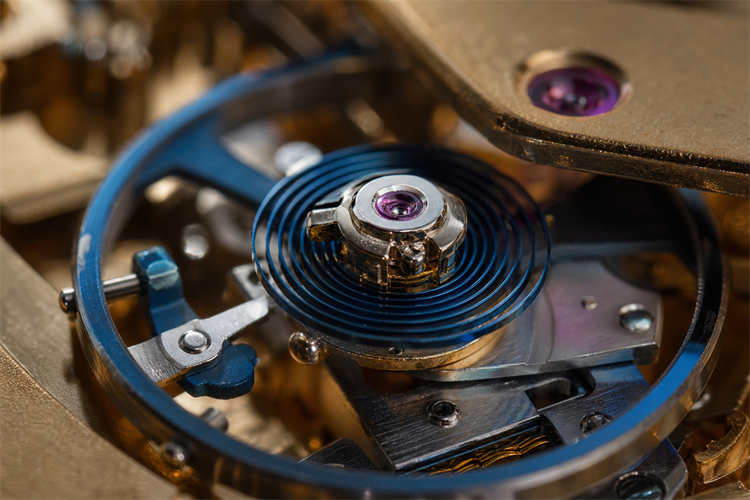
The beat rate of a movement refers to the frequency of the mechanical oscillating system formed by the balance wheel and hairspring. That oscillation frequency — and its stability — is the key to a watch's timekeeping precision.
When we talk about oscillation frequency, we're referring to the number of times the balance wheel swings, measured per hour. One swing left and one swing right constitutes a full oscillation. In theory, the higher a movement's beat rate, the more precise its timekeeping. But higher beat rates also bring more severe friction between components and greater energy demand.
To strike a balance between precision and component wear, many brands keep their mechanical movements at **28,800 vibrations per hour** — that is, the balance wheel swings back and forth 28,800 times in an hour, averaging 8 beats per second, which allows timekeeping accurate to **1/8 of a second**.
Some high-frequency movements reach an impressive **36,000 vibrations per hour** — averaging 10 beats per second — meaning the watch can measure time to **1/10 of a second**.
---
## 04. What Does the Rotor Actually Do?
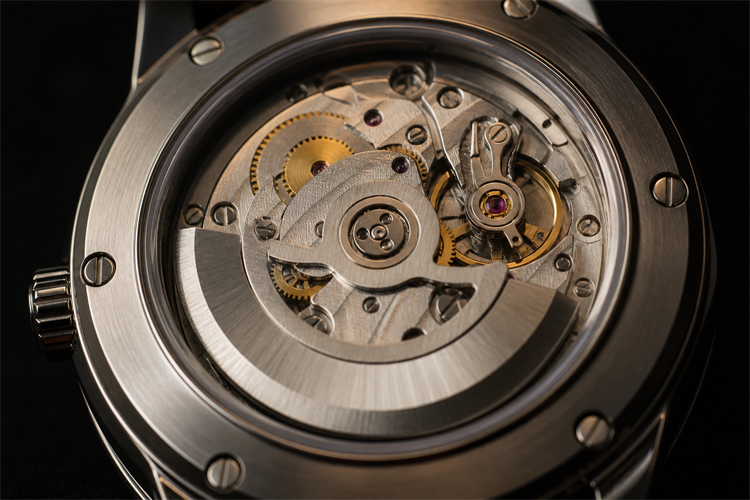
As a critical component of a mechanical watch, the rotor (oscillating weight) relies primarily on gravity to power the movement.
At rest, the rotor holds its center of gravity downward thanks to its own weight. In motion, the centrifugal force generated by the swinging of your wrist as you wear the watch drives the gears to wind the mainspring.
Without a rotor, there is no automatic winding. To a considerable degree, the construction and materials of the oscillating weight play a decisive role in how efficiently automatic winding performs.
---
## 05. What Is a Shock Absorber For?
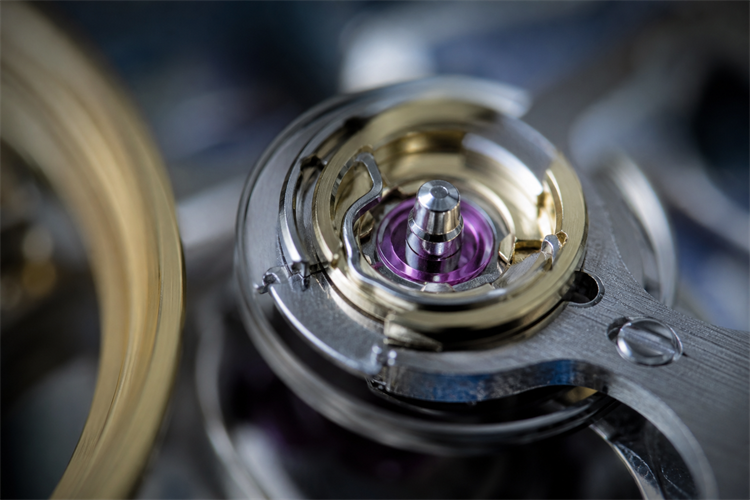
The pivots at either end of a mechanical movement's balance staff are extraordinarily thin — roughly the diameter of a human hair — and highly fragile. A single external impact can snap them.
The shock absorber exists precisely to help the balance staff dissipate the damage caused by external impact.
Modern mechanical watches are almost universally fitted with shock protection. The mainstream systems include **KIF**, **Incabloc**, **Paraflex**, **Nivachoc**, and **Etashoc** shock absorbers, among others.
---
**A note on sourcing:** Component and system names referenced in this article (KIF, Incabloc, Paraflex, Nivachoc, Etashoc) are cited as industry-standard technical terminology, and do not imply any affiliation or endorsement.

2F, Building A, Shimei Industrial Park, Dalang Town, Longhua District, Shenzhen, China
 The History of Watch Straps: From Rope to Rubber | Evolution Guide