╳

Home



 2026-06-09

Features
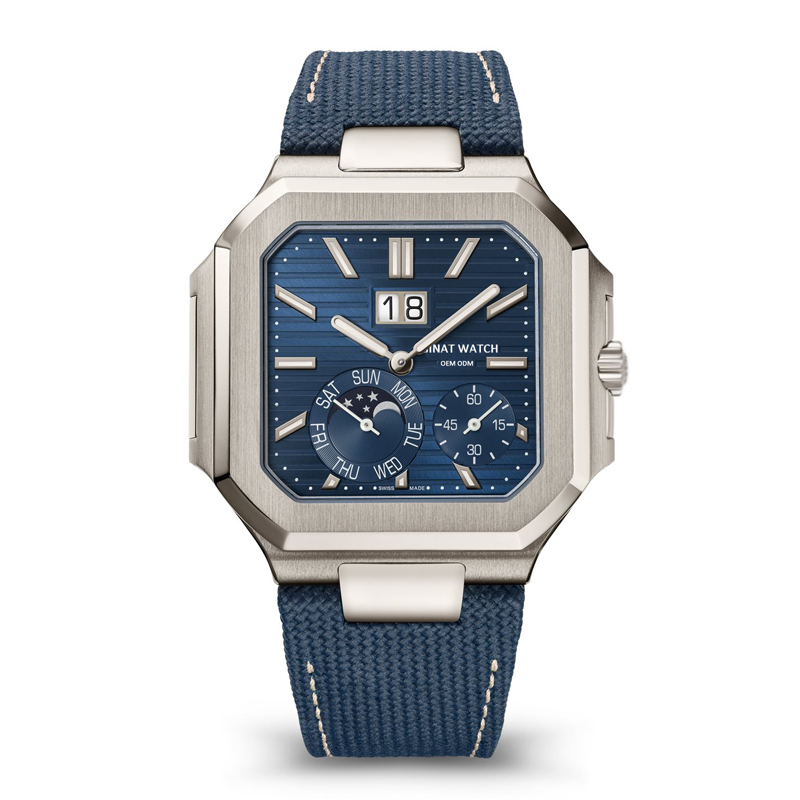
A complete calendar watch displays the day, date, and month.
Adjustment Frequency
Because the mechanism assumes every month has 31 days, errors occur in February (28 or 29 days) and in the 30‑day months (April, June, September, November). As a result, the watch requires 5 manual adjustments per year.
Summary
The complete calendar represents the entry level of mechanical calendar complications. However, its frequent adjustments make it less convenient for daily wear.
Features
An annual calendar also shows the day, date, and month, looking similar to a complete calendar from the dial side.
Adjustment Frequency
The annual calendar can distinguish between 30‑day and 31‑day months, but it cannot recognise the length of February (28 or 29 days). Therefore, only one manual adjustment is needed each year – at the end of February (from 28/29 February to 1 March).
Summary
Compared to a complete calendar, the annual calendar greatly reduces adjustment frequency, yet it still requires user intervention once every year.
Features
The perpetual calendar is the most comprehensive: it displays hours, minutes, seconds, date, day, month, year, and a leap‑year/common‑year indicator. Many perpetual calendars also include a moon phase, though this is often decorative.
Adjustment Frequency
A perpetual calendar automatically recognises all common/leap years (whether February has 28 or 29 days) as well as long (31‑day) and short (30‑day) months. Under normal use, no adjustment is ever needed – unless the watch runs down or is damaged.
Summary
Thanks to its high complexity and accuracy, the perpetual calendar is considered one of the great horological complications. It rarely – if ever – needs adjustment during the owner’s lifetime, hence the name “perpetual”. Naturally, such watches command a higher price.

2F, Building A, Shimei Industrial Park, Dalang Town, Longhua District, Shenzhen, China
 WATCH DIAL CUSTOMIZATION