╳

Home



 2026-11-02

What Is a Quartz Movement Watch? Principles, History, and Where It Stands Today
1. How a Quartz Movement Works
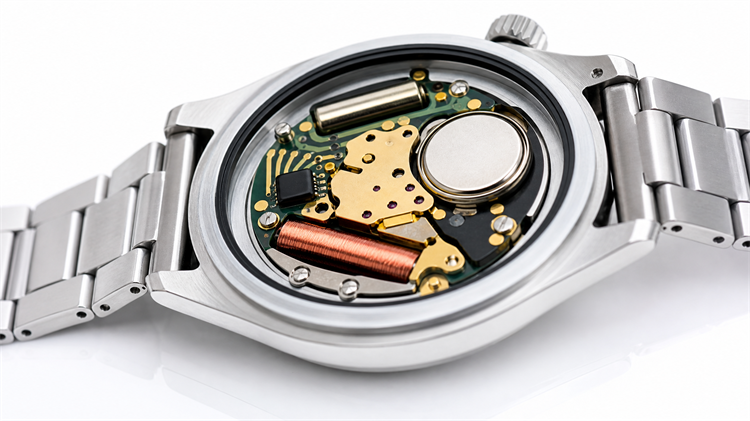
A quartz movement is a watch movement that uses electronic oscillation to drive the hands. It is precisely because of advanced electronic technology that quartz movements achieve such accurate, stable timekeeping — and their widespread availability and ease of manufacture have made them the mainstream of the watch market.
Inside a quartz movement sits a small quartz crystal. Because quartz exhibits the **piezoelectric effect**, it can convert an applied voltage into mechanical vibration. Thanks to this property, the quartz oscillator can vibrate **millions of times per second** — an extraordinarily high oscillation frequency, which provides an extremely precise time reference signal.
---
2. The History of Quartz Movements
Through the 1960s and 1970s, quartz watches became the dominant force in the watch market. Watch manufacturers in Japan, Switzerland, and elsewhere invested heavily in quartz production and development, pushing quartz movements to a level of precision and reliability beyond that of mechanical watches.
But in the 1980s, mechanical watches staged a revival. Driven by technical innovation across the watchmaking industry, mechanical watches reclaimed market ground — and quartz movement watches gradually lost their dominant position.
---
3. Where Quartz Watches Stand Today
Although mechanical watches have become the choice of a certain segment of consumers, quartz movement watches remain the mainstream of the watch market. Their ubiquity and ease of production have made them broadly popular with the general public.
Today, a quartz watch is a cost-effective choice: prices are relatively affordable, and it delivers timekeeping accurate enough for all the demands of daily life.
---
In Summary
A quartz movement watch is a watch whose hands are driven by electronic technology. It is accurate, inexpensive, and remains the mainstream of the watch market. Even though the revival of mechanical watches cost it its dominant position, quartz continues to see widespread use across the market.
---
**Translator's note:** The source text describes quartz oscillators vibrating "millions of times per second." In practice, the tuning-fork quartz crystal used in most watches oscillates at 32,768 times per second (32,768 Hz), while high-frequency quartz oscillators used in precision applications do reach the millions. Both figures in this article have been translated as written in the original.
2F, Building A, Shimei Industrial Park, Dalang Town, Longhua District, Shenzhen, China
 5 Watch Fundamentals Every Enthusiast Should Know | Mechanical Basics